Overdose deaths Buffalo: the numbers
Buffalo-area overdose deaths reached 1,725 in the year ending May 2026. That is down 10% from 1,926 a year earlier in federal provisional counts. Every one of those numbers is a person someone loved.
- fatal overdoses, yearly
- 1,725
- shift vs. prior year
- -10%
- sites that teach naloxone
- 55
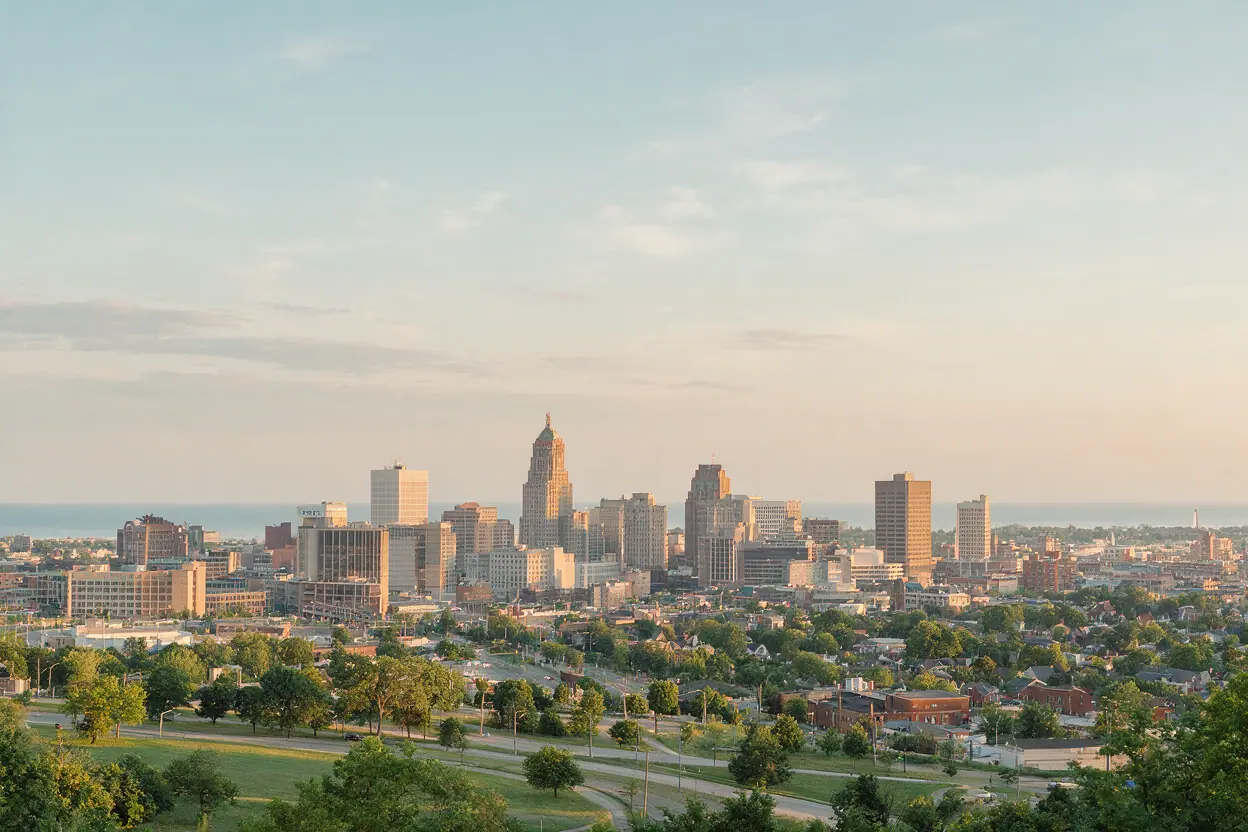
When you are calling because someone you love is using, the monthly headlines can feel abstract. Overdose deaths Buffalo figures are not. They are a measure of how many families in Erie County and the surrounding area lost someone in a single year. That is why it helps to look at the numbers closely, and then at what they mean for getting someone into care.
The figures on this page come from CDC NCHS provisional counts covering the 12 months ending May 2026. Facility numbers come from SAMHSA FindTreatment.gov listings. Nothing here diagnoses anyone or points you to a particular program. It is a starting point, so that when you call a helpline or a provider you can ask sharper questions.
Overdose deaths Buffalo trend is down
Buffalo overdose deaths came to 1,725 in the 12 months ending May 2026, against 1,926 in the 12 months before, a 10% decline. Both engines count Buffalo and Erie County in overdose deaths Buffalo reporting and local treatment listings. That drop is encouraging, yet the current number still works out to more than four deaths each day across the region.
Provisional counts can be revised as death investigations close, so the final number may shift slightly. When you are comparing rehab centers in Buffalo ny, ask each program whether it tracks local overdose trends in its intake planning. That question matters for detox staffing and for how quickly a person can be seen.
- past year
- 1,725
- the 12 months before
- 1,926
What these numbers mean for care choices
Within 25 miles of Buffalo sit 55 SAMHSA-listed facilities: 6 offering detox, 15 residential programs, 5 hospital-based, 5 intensive outpatient, and 38 outpatient sites. When addiction treatment in Buffalo ny is needed soon, a free 24/7 helpline can narrow 55 listed facilities to those with an open assessment. Your call remains private and places no demand on you.
Naloxone is available through 55 programs listed locally, and under a New York standing order pharmacies can hand it out without a prescription bearing your name. Every Buffalo ny treatment center should be able to describe what happens when someone comes in soon after an overdose. Stopping alcohol and benzodiazepines can be risky, so a medical team should watch over it. Helpline advisors work alongside licensed providers and can explain levels of care; admission and insurance coverage are not something they can promise.
Local health figures for Buffalo
Adult percentages in Buffalo versus New York, based on CDC PLACES data (2023).
| Indicator | Buffalo | New York |
|---|---|---|
| Heavy or binge drinking | 16.3% | 16.6% |
| Frequent mental distress | 19.1% | 15.6% |
| Depression | 20.7% | 17.3% |
| Smoking currently | 16.5% | 11.5% |
| Adults 18-64 without health coverage | 9.4% | 9.1% |
Binge drinking by city in New York
| Town | Heavy or binge drinking | Frequent mental distress | Adults 18-64 without health coverage |
|---|---|---|---|
| Sanborn | 19.4% | 17.5% | 4.9% |
| Orchard Park | 18.5% | 13.4% | 3.4% |
| Lockport | 16.8% | 17.9% | 6.8% |
| Niagara Falls | 14.9% | 18.6% | 7.9% |
Which drugs drive overdose deaths
Opioids account for the largest share of overdose deaths in Buffalo, at 1,160 during the 12 months ending May 2026 a 16% drop from 1,374. Fentanyl is present in 952 of those deaths, down 18% from the 1,162 counted a year earlier. Prescription opioids show up in 236 deaths, a 4% decrease. Cocaine is involved in 843 deaths, down 16% from 1,009. Methamphetamine appears in 235, down 17% from 282. Heroin is involved in 52, down 32% from 77. These categories overlap, because many deaths involve more than one substance. If a family member uses both alcohol and opioids, then an inpatient or residential program with medical monitoring is worth asking about first.
| Drug | Past year | Prior year | Difference |
|---|---|---|---|
| Every fatal overdose | 1,725 | 1,926 | -10% |
| Any opioid | 1,160 | 1,374 | -16% |
| Fentanyl and synthetic opioids | 952 | 1,162 | -18% |
| Heroin | 52 | 77 | -32% |
| Opioid pain medications | 236 | 246 | -4% |
| Methamphetamine | 235 | 282 | -17% |
| Cocaine | 843 | 1,009 | -16% |
FAQ
How many overdose deaths Buffalo recorded in the latest period?
In the 12 months ending May 2026, the Buffalo area recorded 1,725 overdose deaths, per CDC NCHS provisional counts. That is 10% fewer than the 1,926 logged in the previous 12 months. Provisional numbers may be revised as investigations conclude, so treat the total as a solid estimate rather than a final count. The wider trend has headed downward for a second year.
What support groups are available in Buffalo, NY?
Buffalo and Erie County host a range of peer and family support meetings, many of them free and open to people with a substance use disorder as well as relatives. Local hospitals and the 55 SAMHSA-listed facilities in the area can point you to meetings near you. Ask whether a group is for the person using substances or for family members, since the two serve different needs.
How long do most rehabs last?
No two timelines are the same. Detox typically lasts a few days, residential care often runs for weeks, and outpatient treatment may go on for months. Of the 55 facilities near Buffalo listed by SAMHSA, 15 provide residential care while 38 provide outpatient services. Ask every program how it determines when a person should move to a lower level of care, and if any follow-up happens after discharge.
Who pays for inpatient rehab?
What you pay hinges on the program and the individual's insurance. Substance use treatment is covered by New York's Medicaid program, and the federal parity law restricts certain insurance limits on addiction and mental health benefits. Among the 55 listed facilities near Buffalo, 50 provide telehealth. Check benefits with both the program and your insurer before admission, and ask what happens if coverage ends partway through a stay.
How do inpatient and outpatient rehab differ?
Residential or inpatient rehab offers a place to live and support at all hours, whereas outpatient programs arrange appointments around work and home. In the Buffalo area, 15 listed facilities provide residential care and 38 provide outpatient services. If a person has experienced severe withdrawal or a recent overdose, ask if medical supervision is available before you pick a setting. The appropriate level of care varies from person to person.
Talk about overdose deaths Buffalo
This helpline costs nothing, stays private, and is answered 24/7 by trained advisors connected to state-licensed providers. They can talk through the 55 SAMHSA-listed facilities near Buffalo and which levels of care might suit the situation. Calling commits you to nothing, and nobody will promise coverage or admission. If someone you love is worrying you, a brief call can help you ask the right questions.